
Whitfield County Arrest Records and Charges
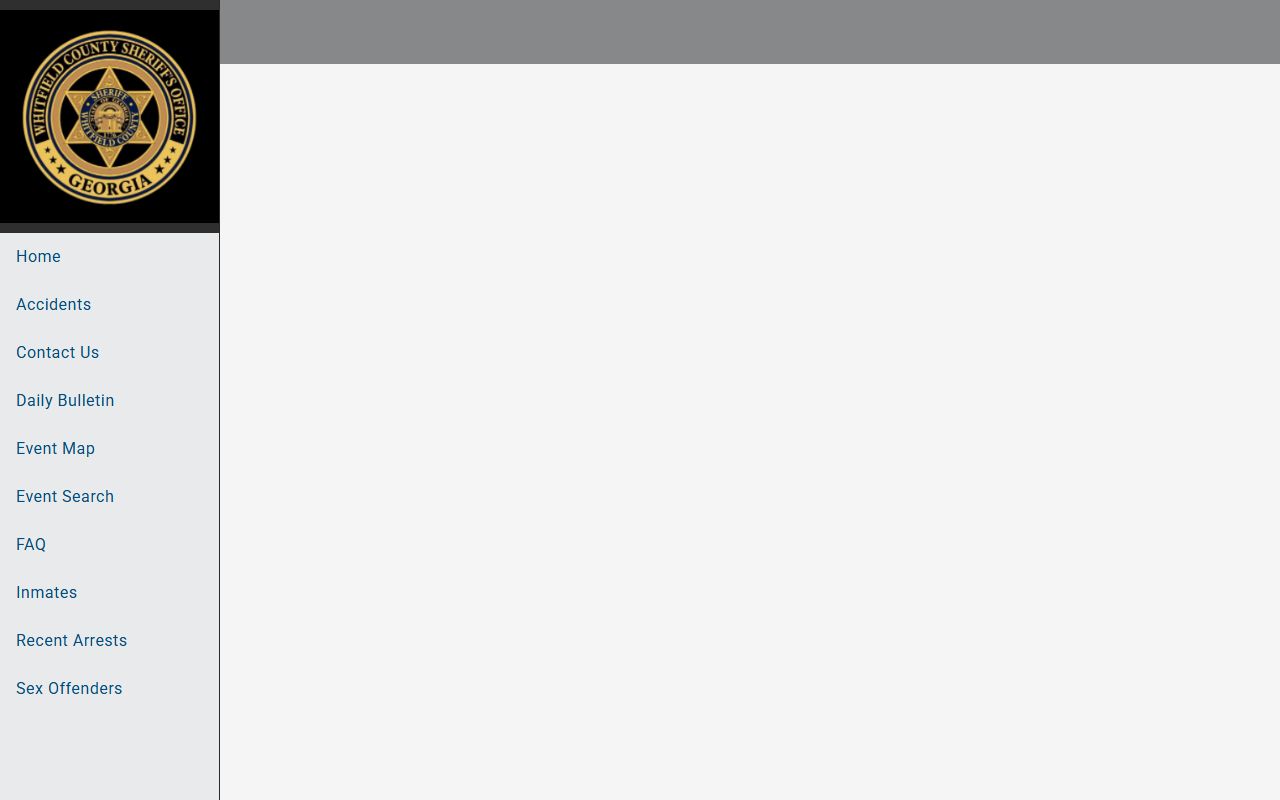
Whitfield County arrest records come from the law-enforcement side of a case. The Whitfield County Sheriff's Office Police-to-Citizen portal includes routes for recent arrests, inmates, wanted persons, most wanted persons, sex offenders, and reports. Recent arrest data can show who was arrested, when the arrest occurred, which agency made the arrest, charges listed at booking, court data when enabled, case numbers when enabled, and bond fields. It is not the same as the final criminal court file.
Court charges after arrest begin when the prosecutor or court process turns the arrest event into a formal charging record. The District Attorney is the chief prosecuting officer for the State of Georgia in the Conasauga Judicial Circuit, covering Whitfield and Murray counties. For Superior Court felony and juvenile delinquency matters, DA charging decisions can determine whether a case proceeds by accusation, indictment, amendment, reduction, dismissal, or plea. A booking charge can differ from the charge that is later filed in court.
The jail roster and booking side belongs with Whitfield County inmate records. The complete criminal case file, with plea, hearing, disposition, and sentence, belongs with the court's criminal record. Arrest and charge review works best when both sides are checked.
Search Whitfield County Arrest Records
The sheriff's P2C recent-arrests route is the main public law-enforcement route for arrest records. The research confirmed fields from the P2C bundle, including first, middle, and last name, full name, age, gender, race, agency, arrest date and time, arrest location, arresting officer names, charges, court name, court date when displayed, case number when displayed, bond amount, bond type, and total bond. Some values may be hidden by display flags.
- Open the Whitfield P2C Recent Arrests catalog or the main P2C portal.
- Search by name and compare spelling variants if no result appears.
- Review the arrest date, agency, charge, court, case number, and bond fields if they are displayed.
- Check the jail roster if the person may still be in custody.
- Confirm the filed charge and case status with the court that handles the case.
The P2C Wanted Persons catalog can also matter when an arrest follows an outstanding warrant. A warrant listing does not prove final guilt and does not replace the court charge record.
The Whitfield P2C Wanted Persons route is one sheriff channel that can precede an arrest record or later court charge.
Whitfield County Charges After Arrest
A court charge record is the formal accusation, not just a booking label. In Whitfield County, felony criminal cases are handled in Superior Court, while Magistrate Court handles warrants and preliminary criminal matters, Probate Court handles many traffic and certain misdemeanor matters, and municipal courts handle city traffic, ordinance, and misdemeanor cases. The charging path depends on court class, offense level, issuing agency, and prosecutor action.
| Document Type | Who Uses It | Common Role | Whitfield County Context |
|---|---|---|---|
| Complaint or warrant application | Officer, complainant, or court process | Starts the probable-cause or preliminary court track | Magistrate Court is the main local warrant channel. |
| Accusation or information | Prosecutor | States the formal charge without grand-jury indictment where allowed | Used when the prosecuting authority files charges in the proper court. |
| Indictment | Grand jury | Charges serious felony matters after grand-jury action | Superior Court handles felony criminal cases in the Conasauga Judicial Circuit. |
The sheriff-side charge shown at arrest can be broader, narrower, or different from the charge later filed. A charge can be amended, reduced, added, dismissed, or resolved by plea. If the result affects employment, licensing, housing, immigration, or custody, the court file and certified disposition are more reliable than a screenshot of an arrest entry.
Whitfield County Charge Status
Charge status explains where the accusation stands. It is not always visible in a booking record. Court records commonly include case number, court, filing date, party names, case type, status, hearing dates, docket entries, disposition, and financial obligations. The Whitfield Magistrate CM Web Search confirms searchable fields such as court code, court division, filing date range, case status, year, case number, case type, party name, and associated party name.
| Status | What It Means | Why It Matters |
|---|---|---|
| Pending | The charge is still active and no final outcome has been entered. | Court dates, bond, and conditions may still change. |
| Amended | The charge has been changed from the original filing. | The final filed charge may differ from the arrest charge. |
| Reduced | The charge severity or offense has been lowered. | A felony-level arrest may later show a lower charge. |
| Dismissed | The court or prosecutor has ended that charge. | A dismissed charge is not a conviction. |
| Nolle prosequi | The prosecutor declines to continue that charge. | It is a prosecution decision, not the same as a guilty finding. |
| Disposition entered | The charge has a recorded outcome. | Read the disposition before treating the case as final. |
Whitfield County Arrest to Court Path
A common arrest-to-charge path starts with arrest and booking, moves to first appearance or preliminary handling, then reaches the prosecutor and filing court. The path is not identical for all cases. A Dalton municipal misdemeanor can move through city court. A county or Georgia State Patrol traffic matter may go to Probate Court. A felony proceeds through Superior Court, with the District Attorney representing the State in trial and appeal of criminal cases.
Process: Arrest and booking > bond or custody decision > warrant or preliminary court handling > prosecutor review > accusation, information, or indictment > hearings, plea, trial, dismissal, or sentence.
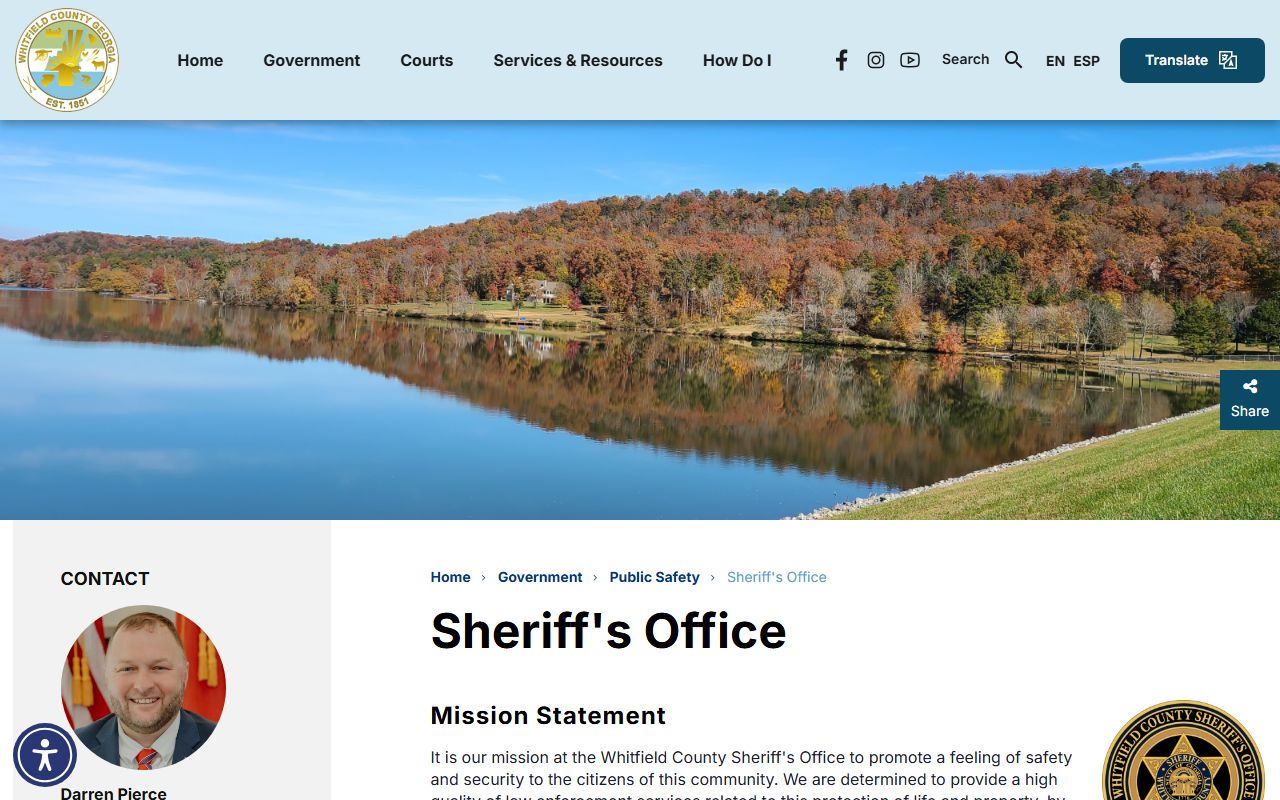
The Whitfield Sheriff's Office page links the P2C records routes and helpful court phone numbers. Its records channels help with reports and arrest-side information, while the formal charge record must be checked in the court that has the case.
The Whitfield County Sheriff's Office landing page is the law-enforcement entry point for P2C and report access.
Charges vs Convictions
An arrest or charge is an allegation or procedural step. A conviction is a final finding after a guilty plea, verdict, or other conviction-result entry. P2C recent arrests, wanted-person listings, bond fields, and preliminary records should not be described as convictions. Court records may show both charges and dispositions, so the disposition field matters.
| Comparison Point | Charge | Conviction |
|---|---|---|
| Stage | Accusation filed after arrest or review | Final guilt result by plea or verdict |
| Source | Sheriff, prosecutor, warrant, or court filing | Court disposition or sentence record |
| Can change? | Yes, it may be amended, reduced, added, or dismissed | May be appealed, corrected, restricted, or sealed under legal rules |
| Proof value | Shows what was alleged | Shows final guilt outcome for that charge |
For the full criminal case path, including arraignment, plea, motions, trial, disposition, and sentence, use the court case file rather than only the arrest record.
District Attorney Charging Role
The Conasauga Judicial Circuit District Attorney is the chief prosecuting officer for the State of Georgia within the circuit. The official page states the DA represents the State in trial and appeal of criminal cases in Superior Court and delinquency cases in Juvenile Court. The judicial directory lists the District Attorney phone as 706-272-2121, while the sheriff helpful-numbers list gives 706-876-1300.
That charging role is why an arrest record and a court charge record can diverge. Police may arrest on one set of suspected offenses. The prosecutor may file a different charge, decline a charge, reduce a charge, seek indictment, or resolve a charge by plea. Victim/Witness Assistance is also part of the DA office context, with Danielle Kean listed as program director on the Whitfield DA page.
The U.S. Attorney's Office for the Northern District of Georgia is the federal prosecution counterpart when a matter is charged federally instead of locally.
Find Whitfield County Court Charges
Charge records can appear through different court channels. Magistrate Court records can be searched through the Whitfield CM Web Search for party, associated party, or case number queries. Superior Court felony records go through the Clerk of Superior Court. Probate Court handles many county and Georgia State Patrol traffic matters, while Dalton and Varnell municipal courts handle city cases. There is no single public statewide Georgia case search that replaces these local routes.
| Channel | Use For | Contact or Route |
|---|---|---|
| P2C Recent Arrests | Arrest-side records and booking charge data | Whitfield Sheriff's Police-to-Citizen portal |
| P2C Inmates | Current local custody and jail profile details | Whitfield Sheriff's Police-to-Citizen portal |
| Magistrate CM Web Search | Magistrate criminal and civil case lookups | Search by party, associated party, or case number |
| Clerk of Superior Court | Felony, divorce, major civil, domestic, and Superior Court case files | 706-275-7450 |
| Probate Court | Traffic, certain misdemeanors, and bench-warrant traffic issues | 706-275-7400 |
| Municipal courts | City traffic, ordinance, and misdemeanor cases | Dalton or Varnell court, based on issuing agency |
Restricted Whitfield County Arrest Records
Georgia law allows restriction of certain criminal history records for non-criminal-justice purposes under O.C.G.A. 35-3-37. The Georgia Bureau of Investigation explains that arrests after July 1, 2013 generally require contacting the prosecutor rather than filing the old arresting-agency application, while older arrests may require applying at the arresting agency. In Whitfield County felony and many criminal matters, the prosecutor will often be the Conasauga Judicial Circuit District Attorney.
Restricted, sealed, juvenile, adoption, mental-health, victim-safety, and protected-identifier records should not be treated as ordinary public records. Juvenile matters fall under Georgia juvenile access rules, and the local Juvenile Court page does not publish an open docket. Court files may also redact protected identifiers under Georgia court rules.
Important: A restricted Georgia record is limited from public access, but it is not the same as physical destruction.
Sealed vs Expunged Records
Georgia commonly uses the term record restriction for limiting public access to eligible criminal history records, while many users still ask about sealing or expungement. Court sealing can also limit inspection of a court file or part of a file. The research did not support promising destruction or automatic erasure of a Whitfield County arrest or charge record. Eligibility is fact-specific and may require prosecutor or court approval.
| Comparison Point | Sealed or Restricted | Expunged Wording |
|---|---|---|
| Public visibility | Limited for eligible records after approval | Not promised by the Whitfield research as physical destruction |
| Law-enforcement access | May remain available to criminal-justice agencies | Must be checked against Georgia law and the order entered |
| Who reviews it | Prosecutor, court, GBI, or arresting agency depending on date and record type | Georgia sources point users to record restriction under O.C.G.A. 35-3-37 |
| Whitfield route | Start with prosecutor or arresting agency as directed by GBI, and court if sealing is needed | Do not assume an arrest or charge vanishes from all criminal-justice systems |
Sheriff Records and Charge Context
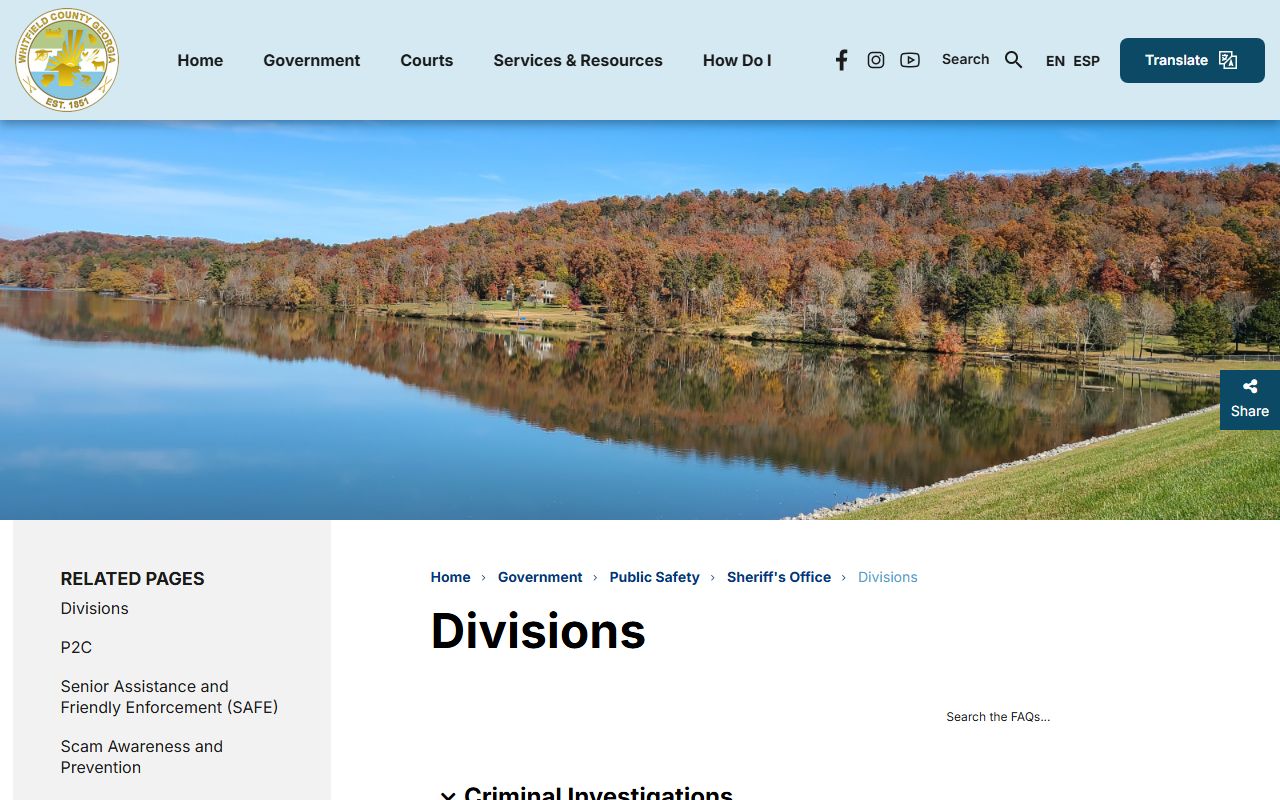
The sheriff's divisions information is important because the Records/Permits Division assists with incident and accident reports, background checks with valid ID, ink fingerprinting, expungements, open records requests, and general inquiries. The division phone is 706-278-3029. The same sheriff source documents detention, mail, visitation, court services, sex offender registry, and records channels.
The sheriff's office is also the source for recent arrests and wanted-person public routes. Its detention material explains that the jail houses people arrested by the Whitfield County Sheriff's Office, Dalton Police Department, Tunnel Hill Police Department, Cohutta Police Department, Varnell Police Department, Georgia State Patrol, GBI, Dalton College Police, and occasional federal agencies. That agency mix is one reason court routing must be checked after the arrest.
The Whitfield Sheriff's Office divisions page documents detention, records, permits, mail, visitation, and court services.
Note: The research found no official Whitfield sheriff or police mobile app, so the mobile-friendly P2C website is the documented public portal.