
Whitfield County Criminal Records
Criminal court records in Whitfield County begin with the court that handles the charge. Superior Court is the felony trial forum and the Clerk of Superior Court handles criminal filing and processing for those cases. Magistrate Court handles warrant applications, first appearances, preliminary matters, and some misdemeanor-related records. Probate Court may hear certain misdemeanors, traffic cases, state game and fish violations, preliminary hearings, or habeas matters unless a jury trial is requested. Municipal courts handle city traffic, local ordinance, and misdemeanor matters within city limits.
The court file is distinct from law-enforcement data. The Sheriff's Police-to-Citizen portal may show recent arrests, wanted persons, reports, and jail information, but a court record shows what was filed and what the court did with the case. For the arrest-to-charge path, use Whitfield County arrest records and court charges; for the full file and outcome, use criminal court records.
The Georgia Bureau of Investigation record restriction page is relevant because criminal history access can change after eligible restrictions under Georgia law.
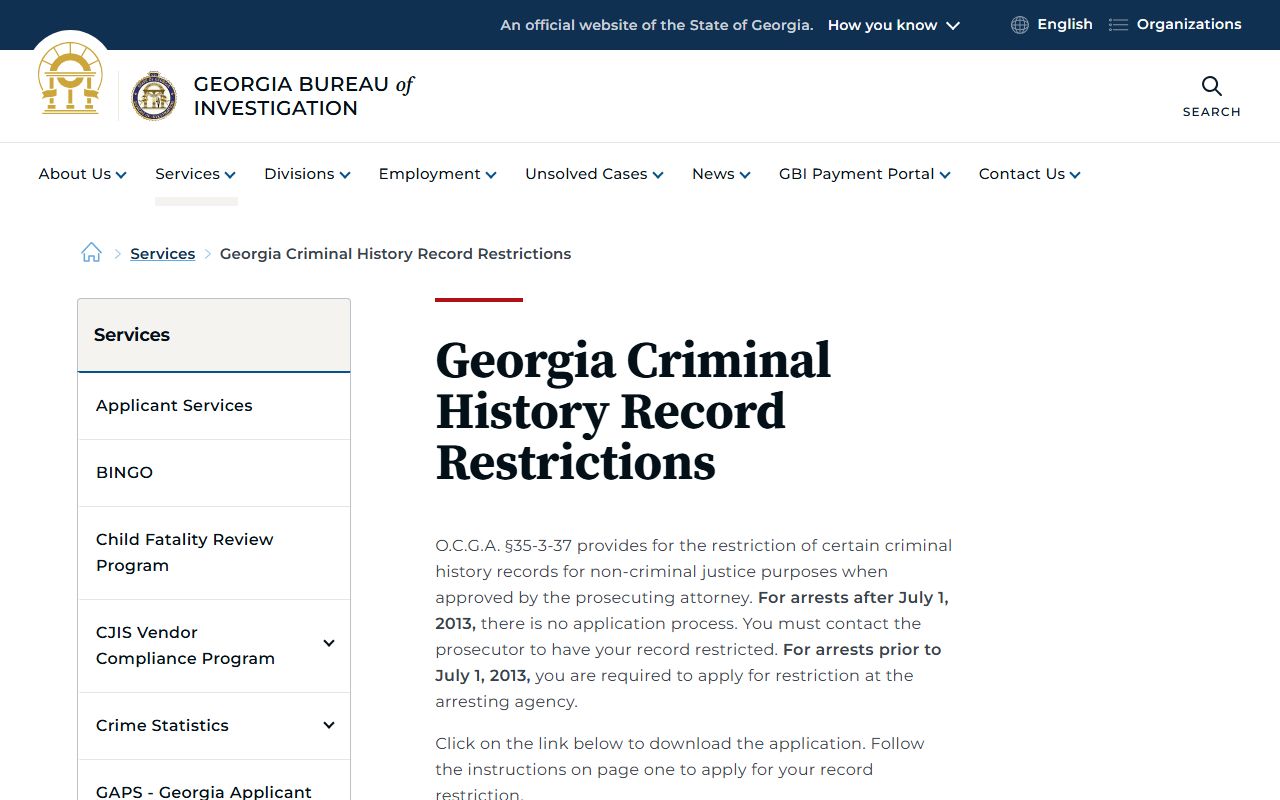
Restriction rules affect public criminal history access, but they do not replace the need to check the court that handled the case.
Search Whitfield County Criminal Records
Whitfield County criminal court records do not sit in one universal database. The Clerk of Superior Court is the starting point for felony files in Superior Court. Magistrate Court criminal and preliminary matters may be found through Whitfield County Magistrate CM Web Search, which supports party, associated-party, and case-number searches. City misdemeanor or ordinance cases should be checked with the correct municipal court, such as Dalton or Varnell, when the event happened inside city limits.
The Sheriff's P2C recent arrests catalog can be useful for identifying arrest date, agency, charges, court, bond, and case-number information when enabled.
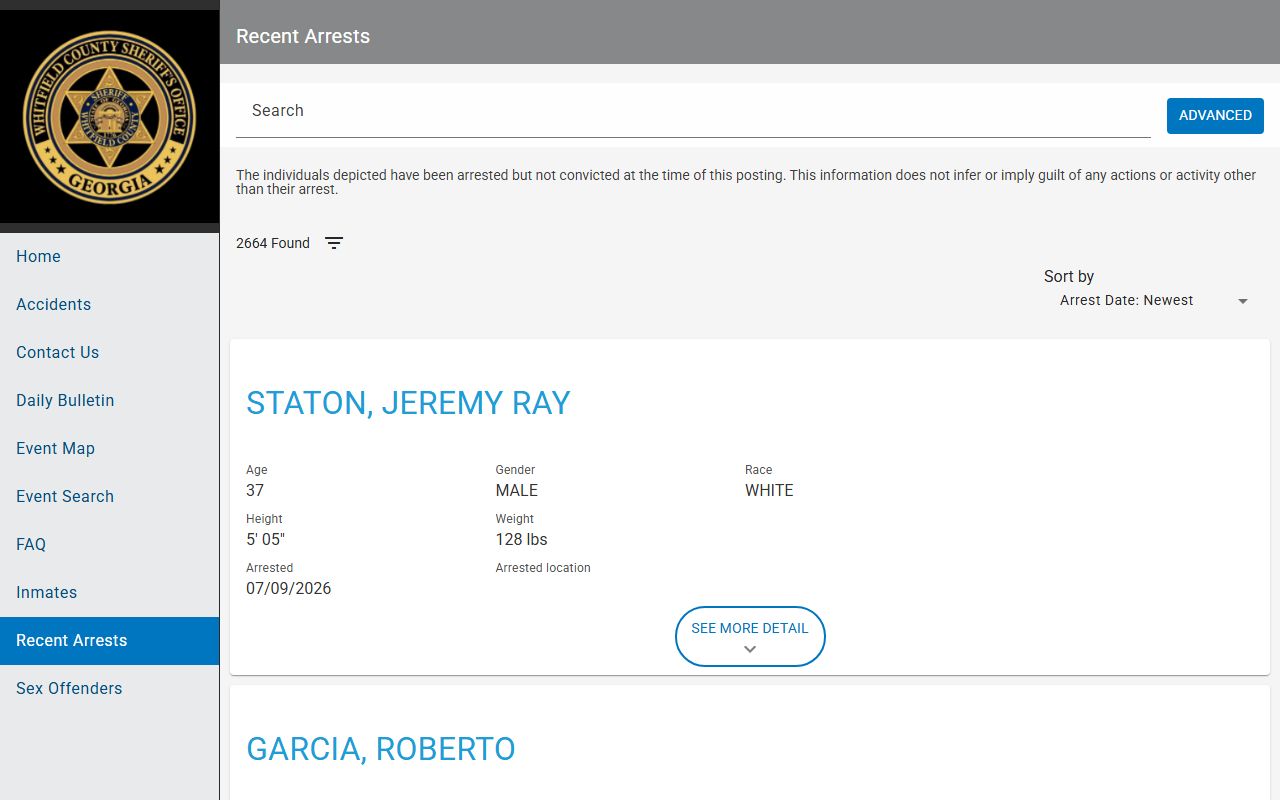
Recent arrest data is not the final criminal court record because filed charges and court dispositions can change after arrest.
- Identify the court. Use Superior Court for felonies, Magistrate Court for preliminary or warrant-related matters, Probate Court for assigned misdemeanors and traffic, and municipal courts for city cases.
- Search by defendant name or case number when an online route is available. In Magistrate search, use last name first and no suffix.
- Narrow by court code, division, filing date, case status, or case type when the search form offers filters.
- Review docket entries for arraignment, motions, plea, trial, disposition, sentence, fines, costs, or probation references.
- Request a certified copy from the clerk that owns the file if the record will be used for a legal, licensing, immigration, or agency purpose.
Whitfield County Criminal Case Flow
A criminal case can touch several offices before it reaches a final disposition. A person may be arrested and booked at the county detention facility. Magistrate Court can be involved with warrants, first appearance, and preliminary matters. The District Attorney for the Conasauga Judicial Circuit represents the State in Superior Court felony cases and appeals, while lower court prosecutors handle other matters. Once a case is filed, the court record tracks hearings, motions, plea decisions, trial activity, and sentencing.
Case flow: Charges Filed › Arraignment › Pretrial / Motions › Plea or Trial › Disposition › Sentencing
| Stage | What Happens |
|---|---|
| Charges Filed | The prosecutor or charging authority files the accusation, indictment, citation, or complaint that starts the court case. |
| Arraignment | The defendant appears in court, charges are addressed, and a plea may be entered. |
| Pretrial / Motions | Attorneys file requests, argue legal issues, exchange information, or seek changes before trial. |
| Plea or Trial | The case resolves through a plea, bench trial, jury trial, dismissal, or other court action. |
| Sentencing | The court imposes fines, jail, probation, restitution, treatment, community service, or other terms if there is a conviction or plea. |
Whitfield County Criminal Record Fields
A Whitfield County criminal court record can show the case number, defendant name, court, division, filing date, charges, plea, hearing dates, bond references, motions, disposition, sentence, fines, costs, restitution, and probation terms. The research confirmed Magistrate search fields and P2C law-enforcement fields, but it did not confirm every live court-result field without a real case submission. That gap matters. A search result should not be assumed to contain documents or sentencing detail unless the court system actually displays them or the clerk provides them.
| Field | What It Shows |
|---|---|
| Case Number | The court tracking number used to find the criminal case and request copies. |
| Defendant | The person accused in the criminal case, distinct from a civil defendant. |
| Charges | The filed criminal allegations. They may differ from initial arrest charges. |
| Plea | The defendant's response, such as guilty, not guilty, or nolo contendere. |
| Motions | Requests filed by the parties asking the judge to make a ruling before or during the case. |
| Disposition | The outcome of each charge or case, such as guilty, dismissed, acquitted, or resolved by plea. |
| Sentence | The punishment or court terms, including fines, probation, jail, restitution, or treatment conditions when public. |
Charges and Convictions
A charge is an accusation. A conviction is a court outcome. Whitfield County criminal court records can show charges that were amended, reduced, dismissed, nolle prossed, resolved by plea, or tried to a verdict. A recent arrest record may list booking charges before the District Attorney or court file changes them. That is why the court case should be checked before treating an arrest entry as the final criminal record.
| Charge | Conviction | |
|---|---|---|
| Stage | Accusation filed or alleged | Final court result after plea, verdict, or qualifying disposition |
| Record Source | Arrest, citation, accusation, indictment, complaint, or docket | Judgment, sentence, plea record, verdict, or disposition entry |
| Meaning | Not proof of guilt | Court finding or accepted plea |
| Can Change | Yes, charges may be amended, dropped, or reduced | Yes, appeal, restriction, or later court order may alter public access |
Federal Criminal Records
Federal criminal cases are separate from Whitfield County criminal court records. Whitfield County is in the federal Northern District of Georgia. Federal district court cases are handled through the U.S. District Court for the Northern District of Georgia, and federal docket access runs through PACER. Federal appeals from Georgia go to the Eleventh Circuit. A person involved in a federal case should not be sent to the Whitfield County courthouse for official federal docket copies.
The Northern District of Georgia court site is the official federal district court starting point, separate from the Whitfield County clerk offices.
Federal records may involve Whitfield County residents or events, but they are maintained by federal courts and PACER rather than local court clerks.
PACER is the official federal electronic records system for district, bankruptcy, and appellate dockets.
PACER requires account access and may charge fees, so it is not the same as a free county criminal case search.
CourtListener is a separate federal docket research option identified in the image manifest.
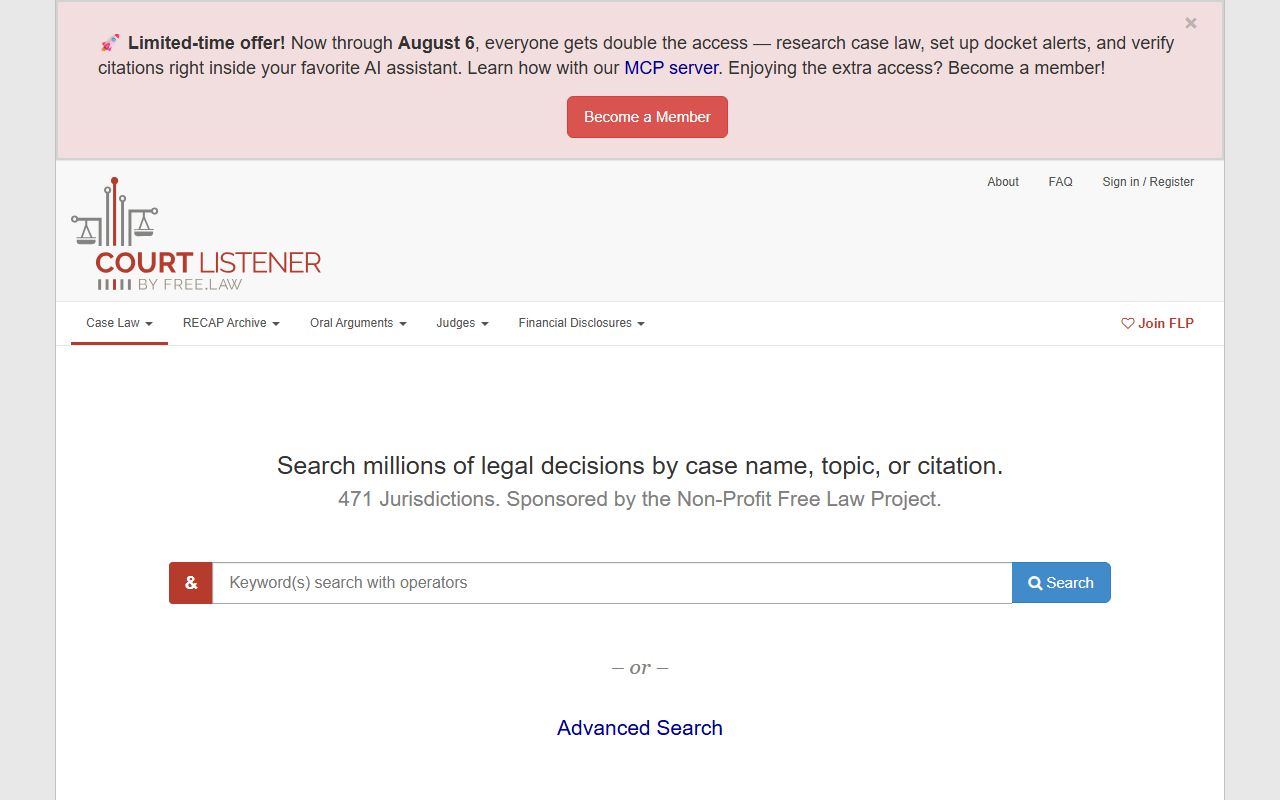
CourtListener can help with federal docket research, but official certified federal copies still come through the federal court system.
Restricted Criminal Records
Georgia uses the term record restriction for many criminal history limits. Under O.C.G.A. 35-3-37, eligible criminal history records may be restricted for non-criminal-justice purposes after the required prosecutor or court approval. The research notes that arrests after July 1, 2013 generally require contact with the prosecutor, while older arrests may require applying at the arresting agency. If the court case itself must be sealed, the request belongs in the court that handled the case.
| Sealed or Restricted | Expunged | |
|---|---|---|
| Visibility | Limited from public or non-criminal-justice access when approved | Georgia commonly uses restriction language rather than promising physical destruction |
| Who May Still See It | Criminal justice agencies may retain access depending on law and order terms | Eligibility and effect depend on the statute and order |
| Where to Start | Prosecutor, arresting agency, or court, depending on arrest date and case type | Confirm with the court and GBI restriction guidance |
Criminal Records Public Access
Whitfield County criminal court records are generally public unless a law, rule, or court order limits access. Georgia's Open Records Act, O.C.G.A. 50-18-70 et seq., covers public agency records unless an exemption applies. Uniform Superior Court Rule 21 states that Superior Court records are public unless access is limited by law or court order. Rule 21.6 addresses protected identifiers such as Social Security numbers and financial account numbers.
Restrictions matter most for juvenile cases, sealed cases, adoption-related files, mental-health proceedings, protected identifiers, and criminal history that has been restricted. Juvenile Court records are governed by O.C.G.A. Title 15, Chapter 11, Article 9 and should not be treated like adult criminal case files. Protective order and domestic violence cases can contain safety-sensitive information. A docket may show that a case exists while keeping some details out of public view.
Important: Public criminal court lookup is not a substitute for an FCRA-compliant background check or a certified clerk record.